
Warning: Full spoilers ahead for Silent Hill: Townfall.
Silent Hill has always been a series about grief dressed up as horror, and Townfall leans into that harder than most entries. Set in the fictional Scottish coastal town of St. Amelia, the game trades Japanese fog for North Sea mist but keeps the franchise’s core obsession firmly intact: what happens to people who refuse to take responsibility for the damage they’ve caused. Here’s the full story broken down, and what each of the game’s five endings actually means.
A Town Built On A Cover-Up
You play as three characters whose fates are tangled together — Simon Ordell, Zoe Ellis, and Richard Shaw — moving between the grounded reality of Fog Town and the nightmarish Otherworld. The game opens on Ordell waking from water with a cannula in his arm, brought to St. Amelia by Shaw under the terms of a deal neither of them says out loud yet. By this point, the town is already a wreck. Ferries won’t land, supplies are running out, and the locals are protesting in the streets over something called the South Well Disaster.
Working backward through the story, the disaster itself comes into focus. Ordell had been brought in as an external safety inspector to assess the SWDP refinery facility after a whistleblower complaint — almost certainly Zoe Ellis, whose connection to Ordell is what got her pulled into a legal case against Chapman Energy Group (CEG) in the first place. Before the inspection even happened, CEG’s leadership — specifically Shaw — had been sitting on repeated warnings that the facility’s Reciprocal Compressor Unit was faulty. Fixing it meant weeks offline and millions in lost profit, so instead the order came down to keep output running and keep the alarms quiet.
That decision is what killed 96 people. The RCU failed catastrophically, the facility caught fire, and the crew’s evacuation turned into a horror story of its own — men going overboard into pools of boiling, burning oil, fishermen dying trying to rescue them, the spillage poisoning the town’s water supply. Only one person survived: Simon Ordell.
The Heart That Shouldn’t Beat
Ordell shouldn’t have made it either. He came out of the disaster with pulmonary edema, chest trauma, third-degree burns, and a foreign object lodged in his spine that had punctured his lungs. What saved him was a heart transplant performed by Zoe Ellis, using an organ harvested from a local named Mr. Stewart — officially recorded as a drug overdose.
That’s where the story’s central rot reveals itself. Stewart’s overdose wasn’t random. Shaw orchestrated it, manipulating Ellis into administering the wrong prescription, specifically so that Stewart’s heart would become available to save the one man whose testimony could make or break CEG’s legal exposure. Keep Ordell alive, and you keep a witness you can control. Threaten to “take the heart back,” and you’ve got permanent leverage over him.
It’s a genuinely ugly piece of manipulation, and it’s the engine driving everything that follows. Ordell’s choice about whether to testify honestly against CEG or commit perjury to protect the company isn’t just a legal decision — it’s framed by the game as the difference between St. Amelia getting to grieve properly and CEG stripping that chance away entirely, the same way it’s already stripped away the town’s healthcare, its water safety, and its ability to leave the island.
Shaw’s Unraveling
Richard Shaw isn’t a mustache-twirling villain so much as a company man who’s spent 25 years making himself indistinguishable from the corporation he works for. After the disaster, his first move was manufacturing a scapegoat — pinning the blame on McKenzie, the engineer who died trying to raise the alarm and can’t defend himself from the grave. That lie cost CEG dearly anyway: staff resignations, plummeting shares, furious shareholders, and Shaw’s own position suddenly on the line.
His solution was the heart transplant scheme, and it’s worth noting the story doesn’t let him off easy for it. In the Otherworld, Shaw is shown wondering aloud whether he should have just let Ordell die — no survivor, no witness, no problem. He didn’t, and that miscalculation is what puts the entire outcome of the game in Ordell’s hands rather than his own.
What The Monsters Are Actually Saying
Silent Hill games live or die on how well their creatures work as metaphor, and Townfall is fairly transparent about its intentions once you start paying attention.
The Weight, Ordell’s personal monster, carries an expanding mass above its head that periodically crashes down on him — about as literal a depiction of unbearable guilt as the series has ever produced. The Behemoth, by contrast, represents CEG itself: a Lovecraftian mass looming over the entire town, its tentacles fitted with incubation tubes that visually tie Shaw to the company keeping him alive, professionally and otherwise. The corpses it periodically throws from its body read as the disaster’s victims, discarded and ignored just like they were in reality.
Ellis gets her own entity in the Patients — stitched-together, burned figures that reflect every person she tried and failed to save during the crisis. Shaw, meanwhile, is stalked by the Widows, shrieking and aggressive, standing in for the grieving women of St. Amelia demanding accountability he refuses to give. Rounding things out are the Twitchers, fallen crew members and rescuers frozen mid-death, and the Metal Heads — straitjacketed locals wandering Fog Town, trapped in exactly the kind of stuck, directionless grief the whole story is built around.
The Five Endings, Explained
Townfall doesn’t gate its endings behind a single dialogue choice at the very end. Instead, your fate is shaped by two running totals tracked across the entire playthrough: how many enemies you’ve killed, and how many Clues and Discoveries you’ve found. Three standard endings come out of that balance, with two additional secret endings locked behind a New Game Plus run.
Justice is the ending the story is clearly building toward as its “true” resolution. To get it, you need a significant lead in Discoveries over kills — ideally 20 or more — while keeping your total kills under 60, meaning you’ll want to avoid unnecessary fights and lean into exploration. In this outcome, Ordell uses the flare gun rather than turning on Shaw directly, drawing the Behemoth toward him instead. Back in the real world, Ordell refuses to give false testimony. Shaw attacks him with a scalpel in retaliation, but the damage is done — his lie collapses, and the implication is that CEG and Shaw both face real consequences.
Forever is the middle-ground outcome, and probably the one most first-time players stumble into without meaning to. It requires only a small Discovery lead — somewhere around 3 to 5 more than your kill count — with total kills still kept under 60. Ordell again reaches for the flare gun, but this time he can’t fully commit to breaking the cycle. He collapses, wakes back at the start of the loop, and Ellis tells him she isn’t going anywhere. It’s a quietly bleak ending: not punished exactly, just stuck, repeating the same unresolved guilt indefinitely.
Abandoned is the bad ending, and it’s the one you’ll land on by playing aggressively. Any run where your kill count outpaces your Discoveries — or simply exceeds 60 kills outright, regardless of how much you’ve explored — locks you into this outcome. Here, Ordell shoots Shaw instead of using the flare, and the scene repeats itself as ghostly copies of Shaw’s corpse pile up around him while the real Shaw mocks him over the radio. In the real world, Ordell stabs Shaw with the scalpel. It’s revenge rather than justice, and the game is fairly explicit that this choice doesn’t free Ordell from anything — it just makes him another casualty of the town’s cycle of pain.
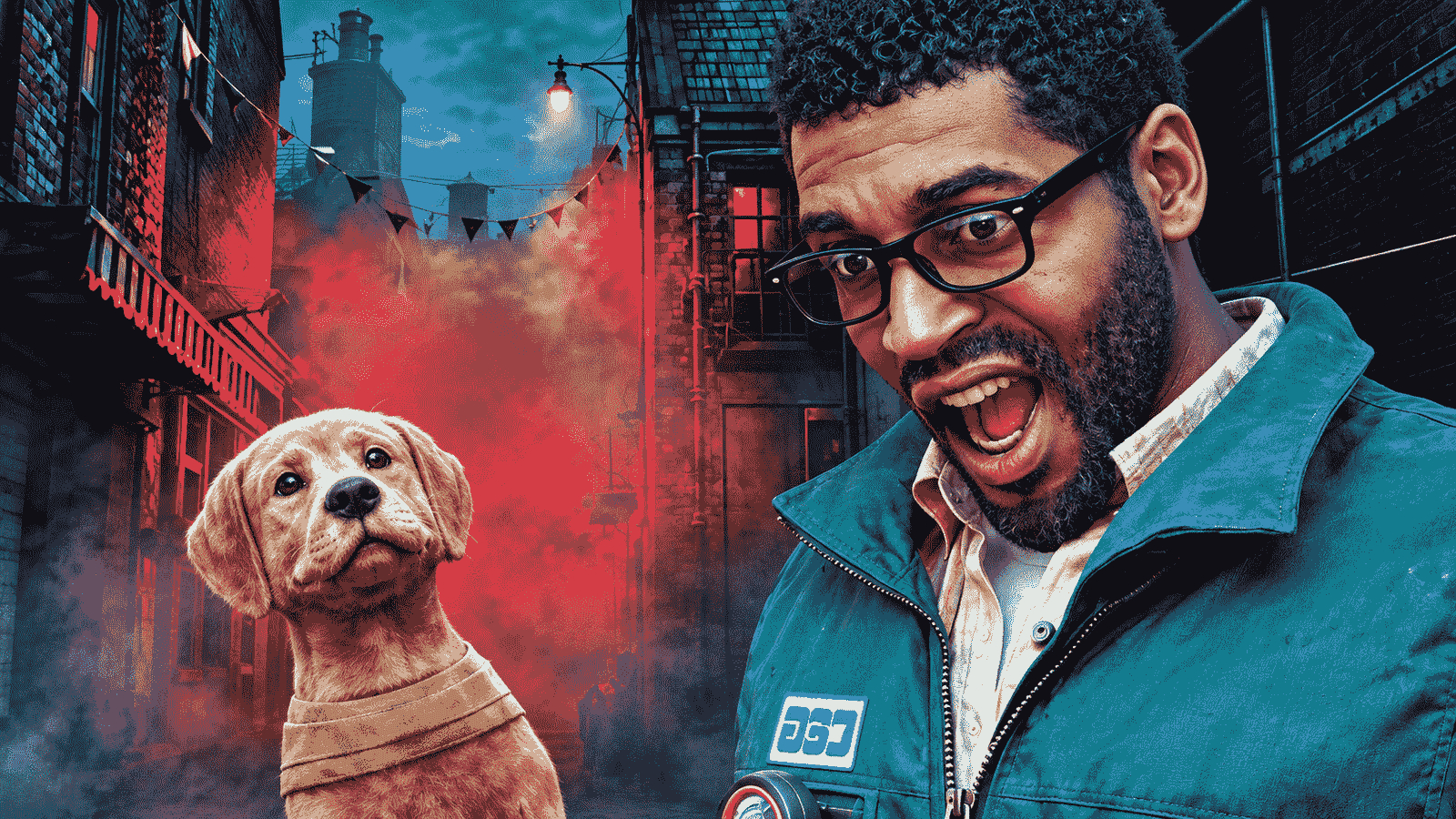
Dog, one of two joke endings exclusive to New Game Plus, swaps out the finale entirely for something considerably lighter. It requires tracking down three hidden coins scattered across different chapters and depositing each one into a Guide Dog charity donation box before finishing the game — complete all three deposits in a single NG+ run, and the ending cutscene changes accordingly.
Sci-fi-lent Hill, the second secret NG+ ending, is the most mechanically unusual of the five, since it skips the final boss fight entirely. Getting it means collecting three Strange Books hidden throughout the story alongside a special Access Card found via a hidden puzzle sequence, then using that card at a specific point near the game’s climax. Successfully triggering it ends the game early with a surreal twist, and rewards players with the Pistol-3000 for future New Game Plus runs.
Which Ending Should You Aim For
If you’re playing Townfall for the story rather than the trophy list, Justice is the ending worth chasing on a first playthrough — it’s the version of the narrative that actually resolves the central conflict rather than leaving Ordell trapped in it. That means resisting the urge to fight everything that moves, and instead prioritizing documents, clues, and environmental storytelling wherever you find it. Forever and Abandoned will likely happen naturally on subsequent runs depending on how you play, and the two secret endings are best saved for a New Game Plus pass once you already know where the game’s hidden collectibles are tucked away.